Ellen Hartman, OCLC Leaders Council Manager, concludes her blog series on global library leadership conversations, inspired by a recent meeting of the OCLC Leaders Council. The first post in the series explored the unique value of global library leadership conversations, as well as some of the practical realities of making this form of engagement successful. The second post enumerated costs involved in participating in, and producing meaningful outcomes from, global conversations.
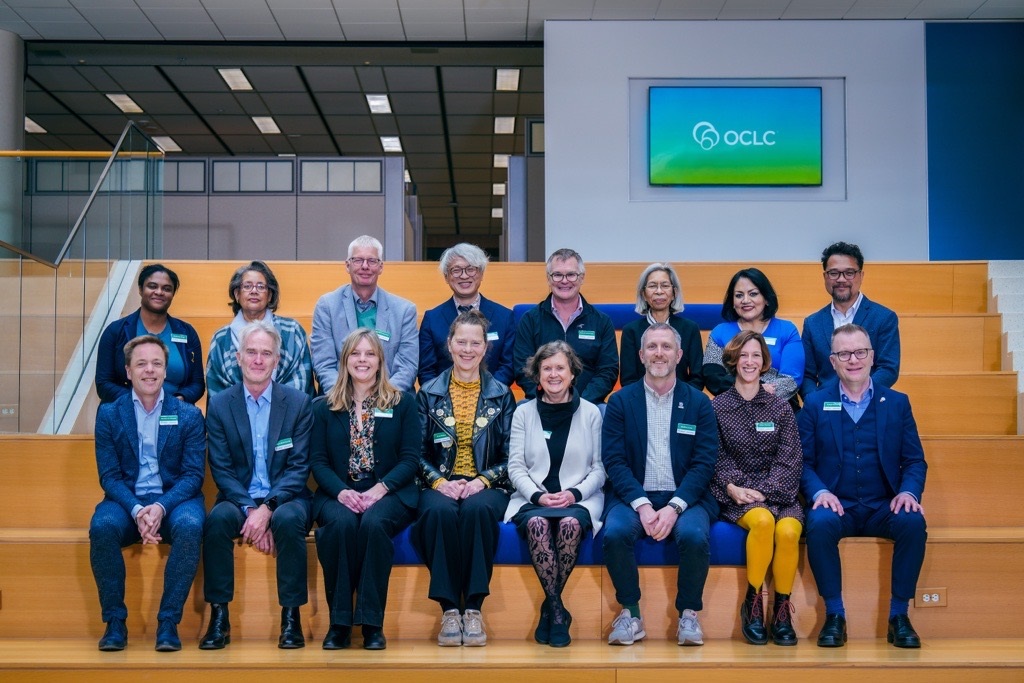
My experience facilitating the recent OCLC Leaders Council meeting reinforced a persistent theme I have been witnessing in many conversations: international cooperation has become more challenging in recent years. Cross-border collaboration, once treated as a natural extension of shared professional values, now often feels slower, more constrained, and more demanding to sustain. Collaborative practices that were previously taken for granted increasingly require explanation, justification, and careful design.
This is not due to a loss of commitment. As the Leaders Council meeting proved, library leaders still want to share ideas, exchange experiences, and where possible, work together in practical ways. What has changed are the conditions under which cooperation takes place. And that distinction matters, because it changes how we interpret the tensions that have emerged and what might be done about them.
The will is there but the conditions have changed
Sitting in global leadership conversations, like those at Leaders Council, reveals how passionate leaders remain about collaboration. Even those who are navigating new realities and constraints want to make sure they can continue cooperating. They feel a real commitment to others who might not (yet) be facing the same pressures, helping them understand what is changing for them, and why it is forcing all of us to think differently.
The concern underneath these conversations is not abstract. If those under pressure to change can’t bring others with them and can’t help the broader community understand what is shifting and why, global cooperation is at risk of breaking apart. And the library leaders in these rooms are eager to stop that from happening.
That is why the shift from assumed to intentional cooperation matters. For many years, international collaboration operated on a set of largely implicit assumptions. Shared infrastructure, common standards, and mutual trust made cooperation feel natural. The primary challenge was usually one of coordination or tools, rather than justification of the decision itself to collaborate. Now this has shifted: collaboration is no longer assumed but is instead something that must be proactively initiated and sustained.
For more on the idea of library collaboration as an intentional, strategic choice, see OCLC Research’s report on the topic.
When efficiency is no longer enough
For much of the past two decades, global efficiency was the self-evident justification for shared infrastructure and international collaboration. The logic was straightforward: working together across borders reduced duplication, extended reach, and delivered more value than any institution could achieve alone.
That logic has not disappeared. But it must now be weighed against other considerations like local and regional guidelines or regulations, as well as institutional priorities and policy. In many contexts, an arrangement that is globally efficient is no longer automatically the right choice.
Leaders increasingly are being asked to justify international collaboration in terms that resonate within their own institutional and political context. Decisions on infrastructure that used to hinge primarily on technical considerations now factor in other considerations. A decision about where data is stored or how a shared service is governed is no longer just an operational question, but a question about accountability, institutional values, and in some cases, political choices.
Data sovereignty and differing needs
Alongside this shift in decision-making criteria regarding whether and how to collaborate is the emerging question of data sovereignty, a topic of keen interest at the Leaders Council meeting. Expectations about data location, privacy, and control vary considerably across jurisdictions. Different regions bring different perspectives on responsible data governance, shaped by distinct legal traditions, political contexts, and public concerns. These are embedded in legal frameworks, regional regulations, national guidelines, institutional policies, and public accountability structures that libraries are subject to, but rarely control.
A single cross-border model therefore becomes difficult to implement. Moreover, regions have varying degrees of experience in navigating these questions. For some, data sovereignty is an emerging pressure. For others, local governance frameworks have long shaped what international cooperation can look like in practice. What is changing is how visible and pressing data sovereignty issues have become in conversations about shared infrastructure.
What conversation can do that infrastructure cannot
For a European academic library, an issue like digital sovereignty may be an urgent challenge, prompting a reevaluation of longstanding shared infrastructure commitments. For libraries in other regions, the same issue may still seem abstract and of little practical impact. This can lead to frustration: why are collaborative approaches that have benefited libraries for decades suddenly being questioned?
Global leadership conversations—being in the room together—cultivate a deeper understanding of new constraints that are in place, and how those constraints impact different libraries in different ways. This is beneficial to everyone in the room and creates opportunities to focus on possibilities rather than limitations. The conversations build on the core values and goals of cooperation, and how those can still be met, even if we need different approaches than before.
In practice, global leader conversations advance international collaboration by:
- Helping library leaders recognize emerging trends. Leaders who are already navigating new constraints can help peers understand what is coming and why. For libraries that have not (yet) encountered these pressures directly, hearing from those who have provides an opportunity to prepare.
- Making sense of what’s happening and how the library ecosystem is evolving. What is driving these changes? How are they manifesting differently across regions and institution types? And what do they mean for the future of shared infrastructure and collaborative work? That shared understanding develops through repeated exposure to each other’s contexts and constraints.
- Illuminating a shared path forward. The library leaders who are already navigating these new conditions are not simply describing a problem but actively working together on what practical cooperation can look like within a new set of realities. This helps clarify where cooperation may remain a feasible, and even preferred, path.
We facilitate conversations at OCLC Leaders Council meetings with these principles in mind, with the broader goal of making that venue a fertile ground for cultivating collaboration opportunities.
Conclusion
What gradually emerges from these conversations is a realization that different regions and institutions will navigate trust, data governance, and accountability in ways that reflect their own realities, rather than converging on a single shared approach. That is not a failure of international cooperation, but international cooperation adapting to a more complex environment.
The challenge is to manage diversity without becoming fragmented—to find the best approach that allows libraries to stay connected without having to operate identically. This requires understanding other institutions’ constraints, and to keep looking for the collaborative pathways that remain open rather than focusing on those that have closed.
International cooperation has not lost its value. But it has, in many cases, moved beyond the simplicity of operating as a default choice that doesn’t need to be explained or defended, or where a globally acceptable model of cooperation and governance is easily found. Global leadership conversations—structured engagement on a small scale with an international group—can help bridge these new realities by cultivating a shared understanding of new constraints on the one hand, and pathways to move forward together on the other.
This is the final post in a three-part series on international library leadership engagement. Access all the posts in the series here!

Ellen Hartman is the Leaders Council Manager at OCLC, where she facilitates engagement with library leaders worldwide, and has been with the organization since 2015, bringing experience working directly with libraries and library leaders across EMEA and APAC regions on strategy and service improvement.
Very interesting , clear review of global cooperation. Great thought piece.