Archive for the 'Archives and Special Collections' Category

The secret lives of researchers

Monday, April 30th, 2012 by Merrilee

As part of our ArchiveGrid experiments, we’re conducting a survey to find out how researchers find resources that will help them locate materials in archives and special collections and how they share information about those resources with others. Not only are we interested in the answer to this question, but we bet you are interested as well.

Here’s how you can help. If you are a regular reader of this blog, you are probably in a position where you work directly with researchers (we do not). You could ask your researchers to take the survey (which is very painless — there are only 14 questions, mostly multiple choice). As an incentive we are offering a chance (for those who are over 18 and live in the US) to win a $50 Amazon gift card.

We will also share our findings with you. We’ll be presenting results at the upcoming RBMS Preconference, and will also summarize our findings elsewhere (say, in this blog).

To make this really easy for you, here’s some text you could include in an email to researchers:

OCLC Research wants to know how researchers (you) use special collections. Complete this survey and be entered in a chance to win an Amazon Gift Card!

Please visit http://www.surveymonkey.com/s/W8MKXP9 to answer some questions about how you find – and find out about – websites and other research resources. The information you provide will help OCLC Research make it easier to discover materials in special collections.

Getting the word out to researchers is one of our challenges, so thanks for your help.

Libraries rebound

Monday, April 9th, 2012 by Merrilee

I’d like to put in a plug for the next event for those who are in the OCLC Research Libraries Partnership, which is
Libraries Rebound: Embracing Mission, Maximizing Impact (June 5-6, Philadelphia). We are still confirming speakers but so far we’ve got a great line up of speakers — we’re also adding reactor panels, so check out the program now and in a week or two to see how it’s shaping up.

The meeting will focus on how libraries can more closely tie services and collections to the university’s (or parent institution’s) mission. In the midst of static or decreasing budgets, being able to demonstrate impact in the pursuit of the institution’s research and teaching goals is paramount.

The day and a half meeting will focus on three themes:

  • How library staff are working side-by-side with researchers in specific disciplines
  • How institutions are adapting special collection-building to align with high priority teaching and research focus areas
  • How libraries are using library space to forge partnerships with other units on campus
  • We’re fortunate to have some smart people from forward-looking institutions who will share their knowledge and experiences with us. And the conversation and discussion will definitely spill into areas beyond the three themes I’ve outlined above. Which is where you come in — we need you to come and talk about what you have planned (as well as to learn from your peers). Register now! Always free for those in the partnership.

    Questions? Let us know. We always love to hear from you.

    Digitizing special collections and leveraging fair use

    Monday, March 5th, 2012 by Merrilee

    After several years of work, the ARL Code of Best Practices for Fair Use in Academic and Research Libraries is out. I was particularly eager to read the Code for two reasons. First, I have long admired the work of Peter Jaszi and his colleagues at American University’s Center for Social Media who have been instrumental in producing several “code of best practices for fair use” documents for documentary filmmakers and other creative communities. Second, I strongly suspected that digitizing unpublished materials would turn up as one of the top challenges for academic and research libraries. And indeed, one of the eight scenarios addressed by the Code is creating digital collections of archival and special collections materials.

    I was pleased to see that the Code and our own “Well intentioned practices for putting collections of unpublished materials online” (or WIP) are quite complimentary. Despite the fact that the Code was developed using what sound like Chatham House Rule and our discussions were conducted in the open, the two documents do not differ much in spirit. WIP downplays fair use in favor of managing risk (and outlines simple practical steps for doing so), whereas the Code makes a strong case for institutions to consider that collections are more than the sum of their parts, and these aggregations themselves may be transformative. It’s a powerful argument and also underscores the value of the work that librarians, archivists and curators everywhere do to build collections.

    As a general observation, this is the first of the “codes of best practice” that has not only had a set of “limitations,” for each scenario but also “enhancements.” According to Peter Jaszi and Brandon Butler from ARL, the enhancements were added because librarians approach fair use with a good deal of caution. My fear is that librarians will read the “enhancements” as “requirements,” which would set us back in terms of making progress on what is perceived by some as a large digitization backlog. However, I do believe that this document should give additional courage to the community to digitize unpublished materials.

    ARL and other organizations have been taking the Code on the road, and their have already been a number of webinars and in-person events so there are plenty of opportunities to learn more. As was said in one of the webinars, fair use is a muscle — if you don’t use it it will wither!

    Turning out the lights on MissingMaterials.org

    Tuesday, February 21st, 2012 by Jennifer

    It’s always sad to say goodbye, but sometimes it’s the right thing to do. I want to alert you that the MissingMaterials.org experiment will close at the end of 2012. The blog is now read-only.

    OCLC Research developed MissingMaterials.org with the guidance of the rare book and law enforcement community, in order to provide a long-desired venue for transparency about theft and loss in libraries and archives. However, the service never achieved the broad usage and adoption we all hoped for: only 10 institutions registered WorldCat Lists and few items were tagged. And although there were 188 posts to the blog, it is not clear if MissingMaterials.org contributed to recovery of any materials.

    While the decision to close MissingMaterials.org is disappointing, there have been many positive outcomes from this project. The Working Group has ensured that the community paid greater attention to transparency about theft and loss, and the project promoted collaboration with booksellers and law enforcement. For example, the Antiquarian Booksellers’ Association of American (ABAA) has adopted social media to broadcast news of thefts.

    This project also did much to promote ideas about how to manage loss in a transparent manner. We held two webinars and published an article in Archival Outlook about the outcomes of the Working Group. I also spoke about MissingMaterials.org at a panel at ALA with an attorney, an FBI agent and Mark Dimunation from the Library of Congress.

    In addition, the concept of using a light touch to alert the community has resonated in many quarters. Development of the free Missing Materials procedure helped OCLC Research staff learn to build services quickly and inexpensively, to meet functional requirements scoped by the Working Group and to repurpose “good-enough” low-overhead components, such as blog software. This has helped to inspire other experimental systems that made greater use of off-the-shelf software, such as the new ArchiveGrid and Website for Small Libraries.

    I’m very proud of our efforts — we were approached by the rare book community to “do something” about the shared problem of stolen materials. We showed up, put forward our best foot, put creative thought into a difficult problem. So despite the fact that MissingMaterials.org is closing, we’d like to thank and congratulate everyone who participated in this great experiment!

    Wanted: your finding aids

    Monday, February 13th, 2012 by Merrilee

    The results of the 1998 Special Collections in ARL Libraries and the follow-up 2009 OCLC Research Survey of Special Collections and Archives revealed that “hidden collections” are a challenge for archives and special collections. Usually, the term hidden collections brings to mind unprocessed and undescribed collections. But what about collections that are processed and described, but the collection descriptions are unavailable online? These off-line collection descriptions represent a special type of hidden collection, and also a special opportunity; the difficult intellectual work of arranging and describing collections is done and in theory, this is a last-mile problem which can be tackled with a small suite of tools and technology.

    OCLC Research is in the early stages of a small scale experiment that will explore the effectiveness of tools and techniques for bringing offline descriptions to the open Web using the Beta version of ArchiveGrid. We’re calling this project “rough and ready” finding aids, because the collection descriptions are rough — and although you may not be willing to call them perfect, you may be ready to make them accessible.

    Do you have typescript finding aids? Are you interested in experimenting with us? If so, drop me a note. If you’d like to contribute electronic finding aids to ArchiveGrid, we’d love to hear from you as well!

    Thanks to those of you who responded to previous blog posts and inquiries — you have helped us to shape this project!

    More about the “mean news”

    Tuesday, February 7th, 2012 by Merrilee

    A while ago I blogged about Sarah M. Pritchard’s talk at the RBMS preconference. I’m still quite taken with her talk about aligning collections and services with mission, and now it’s available online. Go listen to it (she’s the first speaker in the session). You won’t be sorry.

    Other presentations from the preconference are also available for consumption.

    OCLC Research 2011: “Well Intentioned Practices” adopted as a standard

    Wednesday, December 28th, 2011 by Merrilee

    We are closing out 2011 with a mini blog series, looking back on some highlights. This is the fifth post in the series

    Although we’ve blogged about WIP, or “Well-intentioned practice for putting digitized collections of unpublished materials online” we failed to mention that it was endorsed as a standard by the Society of American Archivists in August.

    Documenting the practices of “reasonable archivists” and encouraging the adoption of a risk management approach in digitizing materials from archival collections provides a path forward for archivists and decision makers, helping institutions to at least consider digitizing low risk materials. We’re pleased to have helped with establishing a community of practice for archivists who are concerned with making their materials available for research in an online environment.

    OCLC Research 2011: Jackie Dooley elected to high office

    Friday, December 23rd, 2011 by Merrilee

    As 2011 comes to a close, we are looking back at the year in this mini blog series. This is the third in the series

    We try to blog all the high points, but sometimes we miss a few beats, and this was one of them. In 2011, our very own Jackie Dooley was elected as vice president / president elect of the Society of American Archivists (she is now serving as vice president and will step into the presidency in 2012). This is not only a huge honor but also a big position — being part of the executive in a very large and active organization like SAA will keep Jackie on her toes. Those of us who work with her know she’s up to the challenge. Congratulations, Jackie!

    You can read more about Jackie’s position here.

    OCLC Research 2011: OCLC Research version of ArchiveGrid

    Tuesday, December 20th, 2011 by Merrilee

    As 2011 winds down, we are reflecting on what we’ve worked on or created in a mini blog series. This is the first entry, so stay tuned for more!

    ArchiveGrid is, as the name hints, a discovery vehicle for archival collection descriptions. Although ArchiveGrid has been a subscription service for many years, we’re excited to offer a free version which will serve as a testbed for a number of important experiments around optimizing the discovery of materials that are described at a collection, rather than item, level. In 2011, my colleagues Bruce Washburn and Ellen Ast have invested significant effort in creating a new interface and refreshing the underlying content (bringing the number of records from just over a million to 1.7 million in a relatively short period of time).

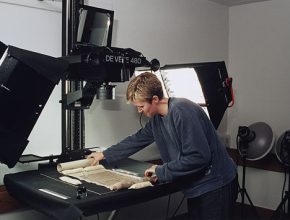
    In 2012, we’ll be experimenting with NER (named entity recognition) across the corpus, and also with a paper finding aids scanning project. We’ll report more about those efforts here. We also hope to refresh our knowledge of our user base, their habits and preferences. In 2006, we conducted user studies that afforded us key insights into what’s important to researchers, but it’s time to refresh our knowledge, so you can look for more information on that as well.

    Check out ArchiveGrid at beta.worldcat.org/archivegrid, and let us know what you think!

    To learn more, you can watch this short YouTube video on ArchiveGrid.

    And if you want to dig deeper, there’s an ArchiveGrid webinar as well.

    “I’m here to give you the mean news” — alignment over assessment

    Wednesday, November 9th, 2011 by Merrilee

    This summer I attended the RBMS preconference (that is, the Rare Books and Manuscripts section of ACRL, and the preconference is held before ALA Annual each year. If you don’t know what ACRL and ALA are, maybe you are reading the wrong blog?).

    The conference was very good, but one talk, given by Sarah Pritchard (university librarian at Northwestern University) has resonated with me, even months later.

    Sarah started by saying she was there to give us the “mean news”: It’s not about us (libraries); it’s about the institution (university). Thinking politically (and practically) it’s essential that the library appeal to the mission of the larger institution. Even though “assessment” is very trendy right now, what’s even more important is “alignment.” Some of my take-aways:

  • Pay attention not just to the stated mission of an organization, but also to what parts of mission are window dressing. For example, lots of universities say they support civic and community engagement. But has the campus established programs and made and real investments in these areas?
  • Align collections and services with core research and teaching areas. This requires asking some tough questions. If there are no courses in a special collections area – even for one year – can you justify continued purchases in that area?
  • Be sensitive to enormous pressures felt by top administrators: how are libraries helping the institution be more competitive, attract better students, get more grant funds, help faculty do better research and publish more? Can we engage with faculty research beyond materials procurement? Help with publishing, research, managing data? There are opportunities here to demonstrate value.
  • “Stop talking about the library as the heart of the campus, start talking about the librarians” — it’s less about collections, and more about services.
  • This message of alignment over assessment implies (I think correctly) that libraries need to act strategically and design customized services to support campus goals, which will necessarily differ. What may be wildly impactful on one campus, may not be on another. This is not to say that we cannot usefully take ideas and models from one another — I think we can. But we need to do so strategically and with a recognition that there are key differences. And periodically look up to see what strategy is most appropriate in a given setting.

    These ideas were echoed in some of the reporting out from last month’s ARL membership meeting. In the closing session, John V. Lombardi, president of Louisiana State University told librarians (in reference to digitization and technology), “Instead of rushing in and participating in a game where you don’t have the muscle, you want to stand back” and wait for the right moment.

    The article continues:

    Ever blunt, Mr. Lombardi used humor to make his point. When people ask him for money, he said, his first question is, What will that project do to make the university more competitive? “If you can’t persuade me that the work you’re doing is going to make us more famous, we’re not going to be interested in investing in you,” he said. “Is that wise and profound and good? No. It’s stupid. But that’s the way it is.”

    His concluding comment: “The football team is allowed to run a deficit of $3- to $7-million. And you’re not.”